Oestrogen Dominance Symptoms – What They Mean and How to Support Them
Many women know the feeling of the second half of their cycle being off, but they’re not always sure why. One of the most common patterns I see in clinic is oestrogen dominance, and the symptoms of oestrogen dominance can affect mood, energy, digestion, skin and your period. It doesn’t mean oestrogen is high in isolation. It usually means oestrogen is high compared to progesterone, and that shift can influence how you feel across the month.
If you’d like a simple starting point while you’re here, you can download my Hormone Health Starter Kit which includes a few practical steps to try this week. I see this pattern often in clinic. You can read more about my approach to women’s health here.
Let’s look at what oestrogen dominance feels like, why it happens and what you can do day to day to support your symptoms.
What Oestrogen Dominance Means
Oestrogen and progesterone work in partnership throughout the menstrual cycle. Oestrogen rises in the first half and peaks around ovulation. Progesterone should rise afterwards, during the luteal phase. When progesterone stays low, or when oestrogen isn’t cleared efficiently, the balance between them shifts.
Many women describe feeling puffy, low, reactive or overwhelmed in the days before their period. Understanding what’s happening helps you take steps that genuinely support how you feel.
Common Signs of Oestrogen Dominance
These are the most common oestrogen dominance symptoms, and they often overlap. If several feel familiar, your hormones may need more support.
PMS that disrupts your rhythm
Irritability, emotional sensitivity and low motivation in the second half of the cycle.
Breast tenderness or swelling
Especially in the week before your period.
Bloating or fluid retention
This often appears during the luteal phase.
Heavier or longer periods
Heavier bleeding or clotting can relate to higher circulating oestrogen.
Breakouts around the chin or jaw
Linked to hormonal shifts and inflammation.
Low mood or anxious feelings
Progesterone influences calmness and sleep, so low levels can affect mood.
Headaches before your period
Hormone changes can influence blood vessels and trigger headaches.
Why Oestrogen Dominance Happens
There isn’t one single cause behind oestrogen dominance symptoms. It’s usually a mix of lifestyle factors, stress, gut health and nutrition patterns.
Inconsistent ovulation
Ovulation is how your body produces progesterone. If ovulation is irregular or doesn’t happen consistently, progesterone stays low. The NHS has a simple overview of the menstrual cycle.
Blood sugar swings
Skipping breakfast, having very light lunches or relying on convenience snacks influences cortisol, which affects hormone regulation.
Gut health changes
The gut plays a role in clearing metabolised hormones. When digestion is slow or the microbiome is imbalanced, oestrogen can be reabsorbed.
High stress loads
When stress stays high, the body prioritises cortisol over producing optimal progesterone.
Low fibre intake
Fibre helps bind and remove metabolised hormones. Many women find symptoms ease when fibre increases.
Poor sleep
Sleep affects hormonal signalling, mood, appetite regulation and inflammation.
Knowing your personal mix of factors helps you choose the habits that create the biggest shift. If you want a deeper understanding of how your hormones work across the month, I explain this inside The Hormone Health Blueprint.
Practical Steps That Help
These habits support hormone balance in a realistic way.
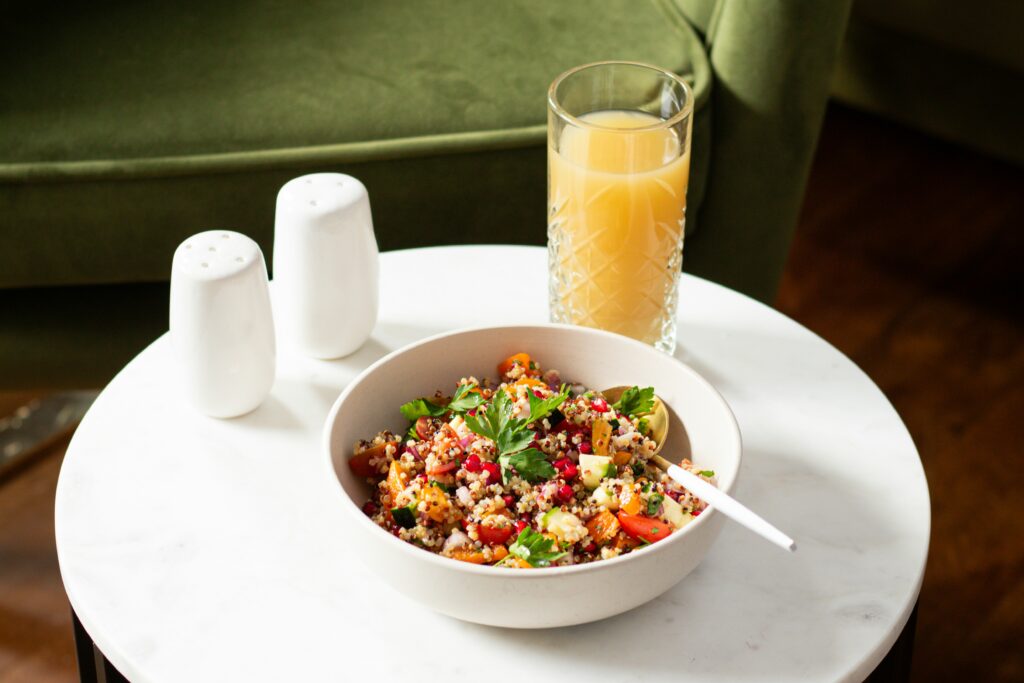
Build balanced meals (especially breakfast)
A mix of protein, healthy fats, fibre-rich carbs and vegetables supports more consistent energy and hormone regulation.
Increase fibre through whole foods
Beans, lentils, oats, vegetables, fruit, nuts and seeds support hormone metabolism and gut health.
Support digestion with simple habits
Slow down at meals, avoid multitasking while eating and include fermented foods if tolerated.
Be mindful with caffeine
If caffeine leaves you feeling wired, try having it after breakfast instead of first thing.
Include movement that supports your energy
Walking, Pilates, strength training or low-impact cardio all support digestion, mood and hormonal signalling.
Consider your alcohol routine
Even small reductions can influence symptoms.
Track your cycle
Awareness helps you plan your routines, expectations and nutrition more effectively.
Include omega-3 sources regularly
Fatty fish like salmon, sardines and mackerel support inflammation, skin health and hormone production.
When Extra Support Helps
If you’re experiencing consistently heavy periods, shortened cycles, extreme bloating, mood changes that impact daily life or low energy that doesn’t shift, it can be helpful to speak with a healthcare professional and consider more structured support.
If you want a clearer understanding of what’s behind your symptoms and how to support your hormones across the month, I cover this in depth inside The Hormone Health Blueprint.
Many women feel frustrated when symptoms change from month to month. Oestrogen dominance is common, and the symptoms of oestrogen dominance can vary month to month, but you don’t have to accept feeling off every cycle. Small daily changes across meals, digestion, stress and sleep often create meaningful improvements.
If you want step-by-step guidance on understanding your cycle, improving symptoms and building a routine that supports your hormones throughout the month, you can explore The Hormone Health Blueprint inside the Digital Nutrition Academy.
If you prefer a simple starting point, you can download the Hormone Health Starter Kit to begin with a few practical steps today.
